



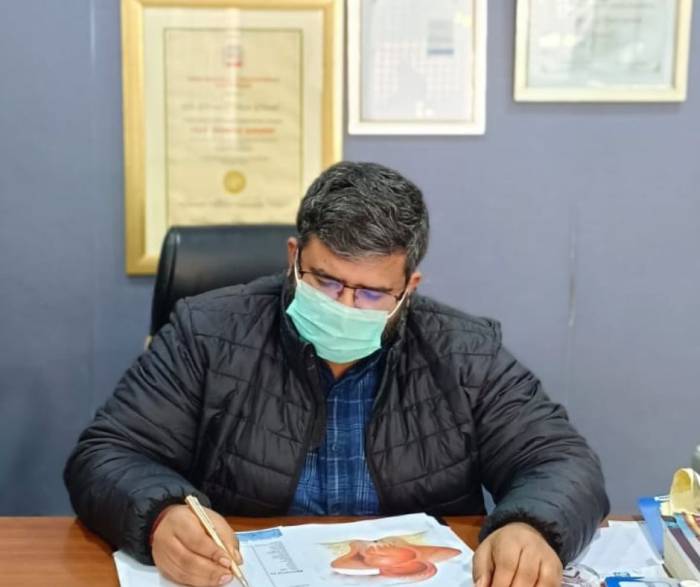
Managing Complex Hernia Cases: Insights from a Hernia Specialist in Agra
Introduction
Not all hernias are straightforward. A complex hernia typically involves recurrent hernias, large defects (≥10 cm), previous mesh infections, or loss of abdominal domain (when the organs have no space to return). These cases require advanced planning and surgical expertise beyond a routine repair.
What Makes a Hernia “Complex”?
• Recurrence: Hernias that return after one or more prior repairs.
• Contamination: Prior mesh infection or enterocutaneous fistulas.
• Size & Location: Giant ventral/incisional hernias or parastomal hernias.
• Patient factors: Obesity, smoking, uncontrolled diabetes, or immunosuppression.
How Are They Treated?
1. Preoperative optimization: Weight loss, smoking cessation, and glycemic control.
2. Advanced imaging: CT scan to map defect and muscle integrity.
3. Component separation technique: Releasing muscles to bring them together without tension.
4. Mesh selection: Biologic or synthetic mesh for contaminated fields.
5. Botulinum toxin (BTA): Temporarily paralyzes lateral muscles, easing closure.
A skilled General Surgeon in Agra will often coordinate with a multidisciplinary team, including nutritionists and pulmonologists, to reduce complication risks.
Why Experience Matters
Complex hernias have higher risks of wound infection, seroma, and recurrence. Choosing an experienced Surgeon in Agra who routinely performs component separation and manages loss of domain is critical for long-term success.
Final Takeaway
If you have a hernia that has recurred or is very large, seek a hernia specialist in Agra early. Delaying care can lead to emergencies like obstruction or strangulation. A thorough evaluation and tailored repair offer the best outcome.
Need a second opinion? Consult a trusted General Surgeon in Agra to discuss your complex hernia case today.
Not all hernias are straightforward. A complex hernia typically involves recurrent hernias, large defects (≥10 cm), previous mesh infections, or loss of abdominal domain (when the organs have no space to return). These cases require advanced planning and surgical expertise beyond a routine repair.
What Makes a Hernia “Complex”?
• Recurrence: Hernias that return after one or more prior repairs.
• Contamination: Prior mesh infection or enterocutaneous fistulas.
• Size & Location: Giant ventral/incisional hernias or parastomal hernias.
• Patient factors: Obesity, smoking, uncontrolled diabetes, or immunosuppression.
How Are They Treated?
1. Preoperative optimization: Weight loss, smoking cessation, and glycemic control.
2. Advanced imaging: CT scan to map defect and muscle integrity.
3. Component separation technique: Releasing muscles to bring them together without tension.
4. Mesh selection: Biologic or synthetic mesh for contaminated fields.
5. Botulinum toxin (BTA): Temporarily paralyzes lateral muscles, easing closure.
A skilled General Surgeon in Agra will often coordinate with a multidisciplinary team, including nutritionists and pulmonologists, to reduce complication risks.
Why Experience Matters
Complex hernias have higher risks of wound infection, seroma, and recurrence. Choosing an experienced Surgeon in Agra who routinely performs component separation and manages loss of domain is critical for long-term success.
Final Takeaway
If you have a hernia that has recurred or is very large, seek a hernia specialist in Agra early. Delaying care can lead to emergencies like obstruction or strangulation. A thorough evaluation and tailored repair offer the best outcome.
Need a second opinion? Consult a trusted General Surgeon in Agra to discuss your complex hernia case today.